
In brief Third-party risk management helps an organization understand its external dependencies, apply controls that match the risk, monitor change, and act before a supplier problem becomes a business crisis.
Third-party risk management (TPRM) is the process of identifying, assessing, controlling, and monitoring the risks created by vendors, suppliers, contractors, service providers, and other external organizations.
In simple terms, TPRM helps you answer five questions:
- Which third parties does our organization depend on?
- What access, data, or business processes do they handle?
- What could go wrong because of that relationship?
- Are the risks within our tolerance?
- What must we monitor, improve, or stop?
This guide explains the complete TPRM lifecycle, the main types of third-party risk, how to build a risk-based program, and which metrics show whether that program is working.
What Is Third Party Risk Management
Third-party risk management is a structured business process for managing risk throughout the entire third-party relationship—from initial selection and due diligence to contracting, ongoing monitoring, and offboarding.
A mature TPRM program does more than send security questionnaires. It connects information about a third party's service, access, controls, financial health, compliance obligations, and operational importance to a clear decision: approve, approve with conditions, remediate, restrict, replace, or reject.
The goal is not to eliminate every risk. That is rarely possible. The goal is to make informed decisions, keep exposure within the organization's risk appetite, and respond quickly when conditions change.
Who counts as a third party
A third party is any external person or organization that provides a product or service, supports a business process, accesses company resources, or handles data on the organization's behalf. Examples include:
- Software-as-a-service and cloud providers
- Payment processors and banks
- Managed IT and security service providers
- Consultants, contractors, and temporary workers
- Logistics, manufacturing, and raw-material suppliers
- Call centres and business-process outsourcing providers
- Marketing, legal, accounting, and recruitment firms
- Building, facility, and physical-security providers
A third party may also rely on its own suppliers. These indirect dependencies are often called fourth parties or subcontractors. They matter when a concentration, outage, breach, or compliance failure at that deeper level can affect your organization.

Why Is TPRM Important
Organizations outsource work to gain speed, specialist expertise, flexibility, and scale. Outsourcing the work, however, does not remove the business impact when something fails.
For example, a vendor incident may:
- Expose customer, employee, financial, or intellectual-property data
- Interrupt a critical product or business process
- Create regulatory or contractual non-compliance
- Cause fraud, financial loss, or supply shortages
- Damage customer trust and the organization's reputation
- Spread through connected systems or shared infrastructure
Effective TPRM gives leadership a current view of these dependencies and creates repeatable controls before, during, and after a third-party relationship.
It is also increasingly reflected in widely used frameworks and regulations. The NIST Cybersecurity Framework 2.0 helps organizations manage cybersecurity risk, while NIST SP 800-161 Rev. 1 provides specific guidance for identifying, assessing, and mitigating cybersecurity supply-chain risk. In the EU financial sector, the Digital Operational Resilience Act (DORA) sets requirements related to ICT risk and ICT third-party risk.
What Types of Third Party Risk Should You Manage
Third-party risk is broader than cybersecurity. A useful program considers all risk types that are relevant to the service and the organization.
- Cybersecurity — What it means: Weak security controls or threats affecting systems and networks; Example: A managed service provider account is compromised
- Privacy — What it means: Improper collection, use, storage, transfer, or deletion of personal data; Example: A processor retains customer data beyond the agreed period
- Operational — What it means: Failure to deliver an important product or service; Example: A cloud outage stops customer transactions
- Compliance — What it means: Failure to meet laws, regulations, standards, or contractual duties; Example: A vendor cannot provide required audit evidence
- Financial — What it means: Financial weakness that may affect service continuity; Example: A critical supplier becomes insolvent
- Strategic — What it means: Misalignment with business objectives or excessive dependency; Example: A key platform cannot support the organization's expansion
- Reputational — What it means: Third-party actions that reduce stakeholder trust; Example: A partner is linked to unethical business practices
- Geopolitical — What it means: Exposure created by location, sanctions, conflict, or trade restrictions; Example: A regional disruption blocks a sole-source supplier
- Concentration — What it means: Too much dependency on one provider, technology, or region; Example: Several critical vendors rely on the same cloud platform
- Fourth-party — What it means: Risk introduced by subcontractors and other upstream dependencies; Example: A vendor's hosting subcontractor suffers a breach
Not every third party needs every type of assessment. The assessment should match the nature and potential impact of the relationship.
TPRM and Vendor Risk Management
The terms are often used interchangeably, but there is a useful distinction:
- Vendor risk management (VRM) usually focuses on companies that sell products or services to your organization.
- Third-party risk management (TPRM) is broader. It can include vendors, partners, contractors, affiliates, intermediaries, and other external relationships.
- Cyber supply-chain risk management (C-SCRM) focuses more specifically on cybersecurity risk within products, services, technology components, and their supply chains.
In practice, the right label matters less than having one consistent process for every external relationship that can materially affect the organization.
The Third Party Risk Management Lifecycle
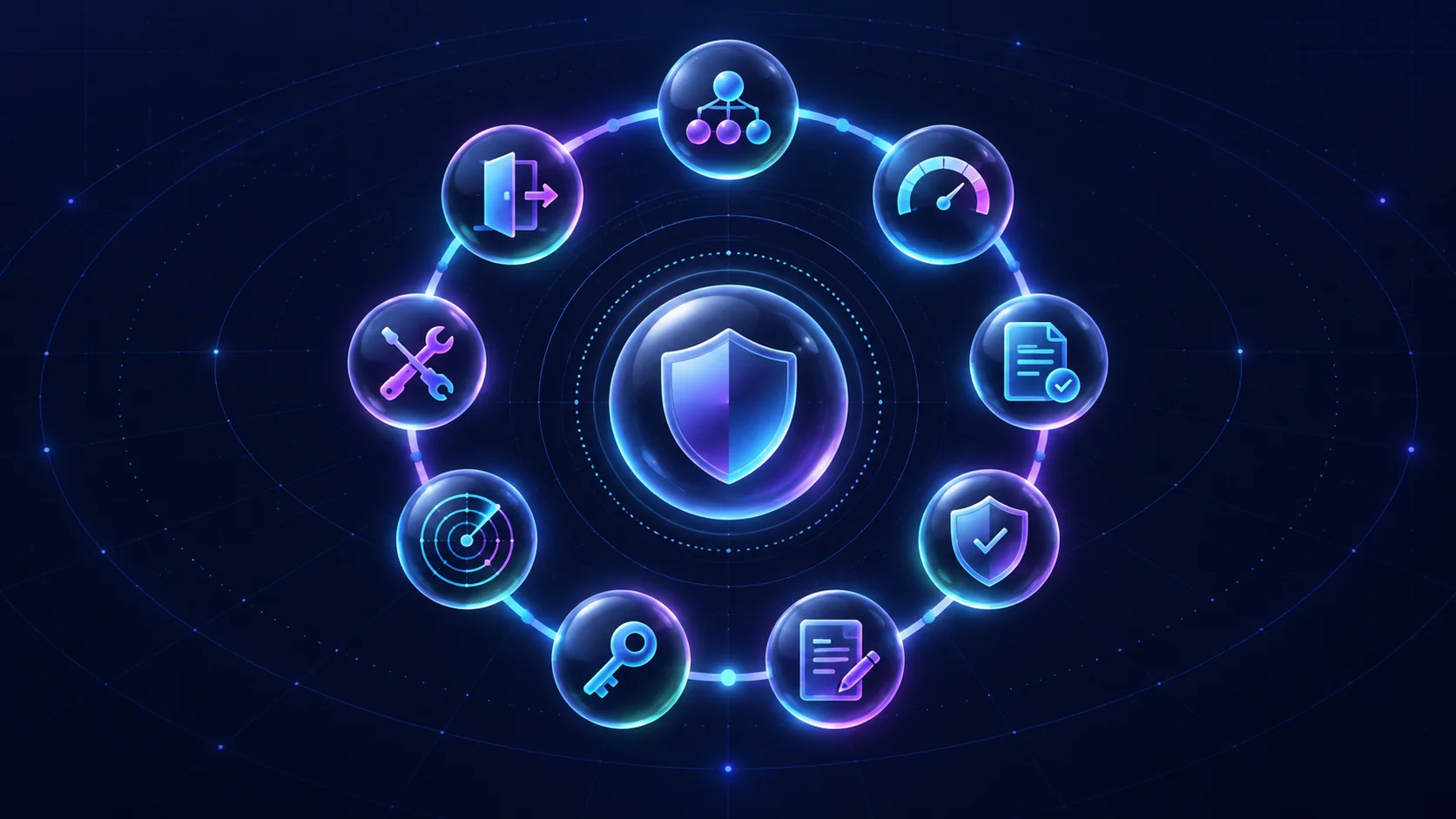
TPRM works best as a continuous lifecycle rather than a one-time review.
1 Build a complete third party inventory
Create a single record for every active and proposed third party. At minimum, capture:
- Legal entity and service owner
- Product or service provided
- Business process supported
- Data accessed, processed, or stored
- System, network, or facility access
- Countries of operation and data hosting
- Contract start, renewal, and end dates
- Subcontractors or critical fourth parties
- Business criticality and current risk tier
Procurement and accounts-payable data can help find suppliers that have not entered the formal process. Identity systems, contract repositories, privacy records, and cloud-discovery tools may reveal additional relationships.
2 Determine inherent risk and criticality
Inherent risk is the level of exposure before you consider the third party's controls. It depends on what the third party will do and the impact if it fails.
Typical scoping questions include:
- Will the third party process sensitive or regulated data?
- Will it have privileged or remote access?
- Does it support a critical product, service, or operation?
- Could a failure create significant customer, safety, financial, or regulatory harm?
- Is the service difficult to replace quickly?
- Does it use important subcontractors?
Use the answers to place the relationship into a risk tier. A simple model is often enough:
- Critical — Typical relationship: Failure could stop a critical service or cause severe harm; Appropriate review: Detailed due diligence, executive approval, strong contract controls, frequent monitoring, resilience and exit testing
- High — Typical relationship: Sensitive access or significant business impact; Appropriate review: Full assessment, evidence validation, remediation plan, regular monitoring
- Medium — Typical relationship: Moderate access or impact; Appropriate review: Targeted assessment and periodic review
- Low — Typical relationship: Minimal access and limited business impact; Appropriate review: Basic screening, standard terms, review on material change
For a deeper method, see How to Assess Vendor Risk Based on the Relationship.
3 Perform due diligence
Due diligence tests whether the third party's controls are appropriate for the risk. Evidence may include:
- Security and privacy questionnaires
- SOC 1 or SOC 2 reports
- ISO 27001 certificates and scope statements
- Penetration-test or vulnerability summaries
- Business-continuity and disaster-recovery test results
- Financial statements or credit information
- Insurance certificates
- Policies, procedures, architecture diagrams, and data-flow maps
- Regulatory licences, sanctions checks, and adverse-media findings
Evidence should be current, relevant to the contracted service, and reviewed by someone who understands the underlying risk. A certificate alone does not prove that every important control is operating effectively.
AI-powered assessments can help extract findings, map evidence to controls, and reduce repetitive manual work. Human review should remain in place for material decisions, exceptions, and unclear evidence.
4 Evaluate residual risk and decide
Residual risk is the risk that remains after considering the third party's controls and any planned safeguards.
A decision should consider:
- Inherent risk and service criticality
- Control design and effectiveness
- Open findings and compensating controls
- Threat, financial, and operational intelligence
- Contract protections
- Your organization's risk appetite
Document the decision, approver, conditions, review date, and any accepted exceptions. High residual risk may require remediation, restricted access, a different service design, an alternate supplier, or rejection.
5 Put the right controls in the contract
Contracts turn risk decisions into enforceable expectations. Depending on the relationship, clauses may cover:
- Security and privacy requirements
- Permitted data use, location, retention, return, and deletion
- Incident-notification timelines and cooperation duties
- Audit rights and evidence requirements
- Subcontractor approval or notification
- Business continuity, recovery targets, and service levels
- Vulnerability and patch management
- Regulatory cooperation and records access
- Cyber insurance
- Termination assistance and secure offboarding
Contract language should reflect the actual risk. It should also be practical enough for operational teams to monitor.
6 Onboard the third party securely
Before access begins, confirm that approvals, contracts, system configuration, data handling, and named owners are complete. Give the least privilege necessary and set an expiry date where possible.
A controlled vendor onboarding process reduces the chance that a supplier starts work before due diligence or required safeguards are complete.
7 Monitor throughout the relationship
A third party can be safe at onboarding and risky six months later. Ongoing monitoring should combine:
- Periodic reassessments based on risk tier
- Security ratings and external threat signals
- Breach, vulnerability, sanctions, and adverse-media alerts
- Service-level and incident performance
- Financial-health indicators
- Certificate, insurance, and contract expiry dates
- Changes in ownership, hosting, service scope, or subcontractors
- Status of remediation actions and risk exceptions
Monitoring should create an action, not just an alert. Define who reviews each signal, how it is validated, and when it triggers escalation or reassessment. Learn more in What Is Continuous Monitoring in TPRM and Why It Matters? and explore external monitoring.

8 Remediate issues and manage incidents
For every material finding, assign an owner, target date, severity, and evidence required for closure. If a deadline is missed, escalate according to risk—not according to how long the vendor relationship has existed.
Your incident process should explain how the third party will notify you, preserve evidence, support investigation, communicate updates, and confirm recovery. Critical vendors should be included in relevant tabletop exercises.
9 Renew or offboard
Reassess the relationship before renewal, especially if the service, data, ownership, location, or threat environment has changed.
When a relationship ends:
- Disable accounts, keys, integrations, and physical access
- Recover company devices and information
- Transfer services and records where required
- Confirm data return or secure deletion
- Close findings and record unresolved risks
- Retain evidence required for audit or regulation
Offboarding is not complete until access and data have been verified—not merely because the contract expired.
How to Build a TPRM Program
You do not need to perfect every process before starting. Build a minimum viable program, then improve it using evidence.

First 30 days establish visibility
- Name an executive sponsor and program owner
- Agree on the definition of a third party
- Combine existing vendor lists into one inventory
- Identify obvious critical services and data processors
- Define a small set of risk tiers
- Stop new high-risk vendors from bypassing review
Days 31–60 create a repeatable workflow
- Add inherent-risk screening to procurement intake
- Define assessment requirements for each tier
- Create approval and escalation paths
- Standardize contract requirements
- Track findings, owners, due dates, and exceptions
- Set renewal and reassessment reminders
Days 61–90 begin continuous oversight
- Connect monitoring signals for critical and high-risk vendors
- Create management reporting and key risk indicators
- Test incident communication with critical providers
- Review concentration and fourth-party dependencies
- Measure cycle time, overdue findings, and inventory coverage
- Plan the next quarter based on the largest gaps
Start with the highest-impact relationships. A risk-based program with good coverage is more useful than an exhaustive process that delays every low-risk purchase.
Roles and Responsibilities in TPRM
TPRM is a shared business responsibility.
- Board or risk committee — Core responsibility: Oversees material exposure and risk appetite
- Executive sponsor — Core responsibility: Removes obstacles and supports accountability
- TPRM or enterprise risk team — Core responsibility: Owns the framework, methodology, workflow, and reporting
- Procurement — Core responsibility: Controls intake, selection, contracts, and renewal checkpoints
- Information security — Core responsibility: Evaluates cyber controls, access, vulnerabilities, and incidents
- Privacy and legal — Core responsibility: Reviews data use, legal duties, clauses, and cross-border issues
- Compliance — Core responsibility: Maps regulatory requirements and retains evidence
- Business owner — Core responsibility: Owns the relationship, service performance, and business risk
- Internal audit — Core responsibility: Independently evaluates program design and effectiveness
- Third party — Core responsibility: Provides evidence, manages controls, and remediates findings
The business owner should remain accountable for the relationship. The TPRM team provides governance and challenge but should not silently inherit every vendor decision.
TPRM Metrics That Matter
Good reporting shows both coverage and risk reduction. Useful measures include:
- Percentage of active third parties in the inventory
- Percentage with an assigned owner, tier, and current assessment
- Critical vendors with tested continuity and exit plans
- Average onboarding and assessment cycle time by tier
- Number of critical and high findings, including overdue actions
- Average time to remediate by severity
- Risk exceptions approaching expiry
- Third-party incidents and service disruptions by severity
- Concentration by provider, technology, country, or fourth party
- Reassessments, contracts, certificates, and insurance nearing expiry
Avoid relying on one average vendor score. It can hide a small number of severe exposures. Show trends, exceptions, business impact, and the decisions management needs to make.
Common TPRM Mistakes
Treating every third party the same
Over-assessing low-risk suppliers wastes time, while under-assessing critical providers creates exposure. Use inherent risk and criticality to set the depth and frequency of review.
Relying only on questionnaires
Self-reported answers can become outdated or lack evidence. Validate material controls and combine assessments with monitoring, performance data, and independent reports.
Reviewing only at onboarding
Ownership, infrastructure, financial health, vulnerabilities, and subcontractors change. Use event-driven monitoring and scheduled reassessments.
Ignoring fourth parties and concentration
Several vendors may depend on the same cloud, payment, logistics, or software provider. Map important dependencies and plan for shared failure scenarios.
Collecting findings without closing them
A long issue register is not risk reduction. Assign owners and deadlines, verify remediation, and escalate overdue high-risk actions.
Buying software before defining the process
Technology can automate work, but it cannot choose the organization's risk appetite or accountability model. Define the policy, tiers, ownership, and decisions first. Then configure the risk management platform around them.
Choosing TPRM Technology
A TPRM platform should support the program rather than create another isolated database. Look for:
- Centralized inventory and relationship ownership
- Configurable intake, tiering, assessments, and approvals
- Evidence collection and control mapping
- Automated reminders and remediation tracking
- Continuous external monitoring and alert triage
- Contract, renewal, exception, and expiry tracking
- Fourth-party and concentration-risk visibility
- Dashboards for operational teams, executives, and auditors
- Role-based access, audit trails, APIs, and integrations
- Transparent AI controls, human review, and secure data handling
Evaluate technology using real workflows and several vendors from different risk tiers. A short proof of concept can reveal whether the platform fits your operating model better than a feature checklist alone.
Frequently Asked Questions
What is the main purpose of TPRM
The main purpose of TPRM is to keep the risks created by external relationships within the organization's tolerance while still enabling the business to use third-party products, services, and expertise.
Is TPRM only a cybersecurity function
No. Cybersecurity is important, but TPRM also covers privacy, operational resilience, compliance, finance, strategy, reputation, geopolitics, concentration, and supply-chain dependencies. It normally requires collaboration across risk, procurement, security, privacy, legal, compliance, finance, and the business.
How often should third parties be assessed
Assessment frequency should be risk-based. Critical and high-risk relationships may require annual or more frequent review, while lower-risk relationships may be reviewed less often. A material event—such as a breach, acquisition, major service change, or new data access—should trigger reassessment regardless of the normal schedule.
What is the difference between inherent and residual risk
Inherent risk is the exposure created by the relationship before considering controls. Residual risk is what remains after the third party's controls, your own safeguards, contract terms, and planned remediation are considered.
What is continuous monitoring in TPRM
Continuous monitoring is the ongoing collection and review of signals that may change a third party's risk, such as breaches, exposed systems, financial deterioration, ownership changes, service incidents, expiring evidence, or overdue remediation.
Can TPRM be automated
Many activities can be automated, including intake, tiering, questionnaire delivery, evidence extraction, reminders, monitoring, and reporting. Material risk acceptance, ambiguous evidence, exception approval, and relationship decisions still need accountable human judgment.